
Detect onboarding fraud before it gets through
Assess onboarding fraud risk before costly checks or unnecessary friction. Bring identity, contact, network, payment and compliance signals together to decide whether to allow, step up, review or block.
- Reduce unnecessary verification
- Step-up verification
- Keep trusted users moving
- Fraud-first decisioning
The Problem
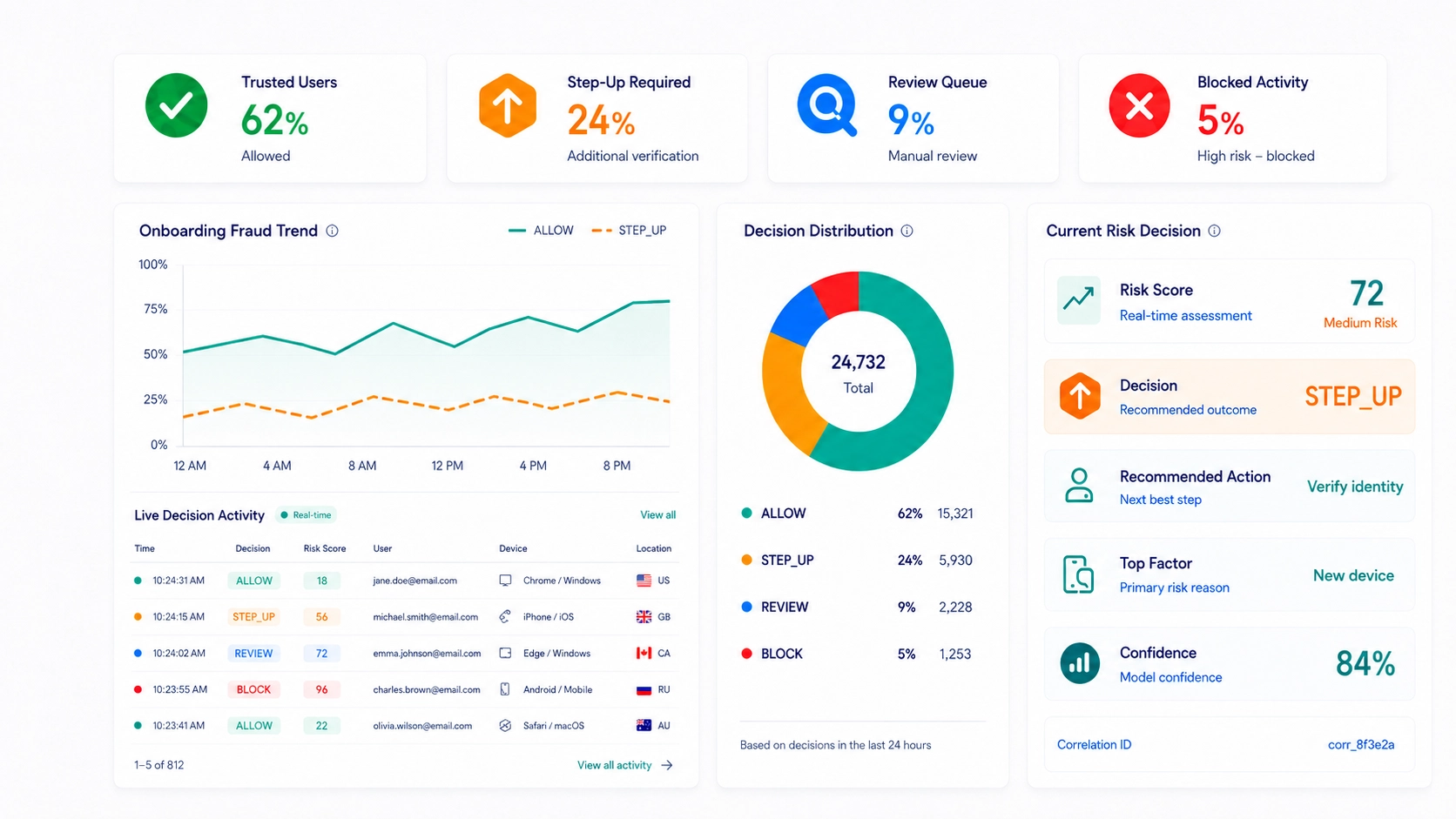
Onboarding fraud starts before verification
Onboarding fraud can begin before identity verification or KYC checks run. Treating every new user the same creates unnecessary friction and cost, while disconnected risk signals can allow higher-risk applicants to move forward unnoticed.
The Threat
Expose the threats behind onboarding fraud
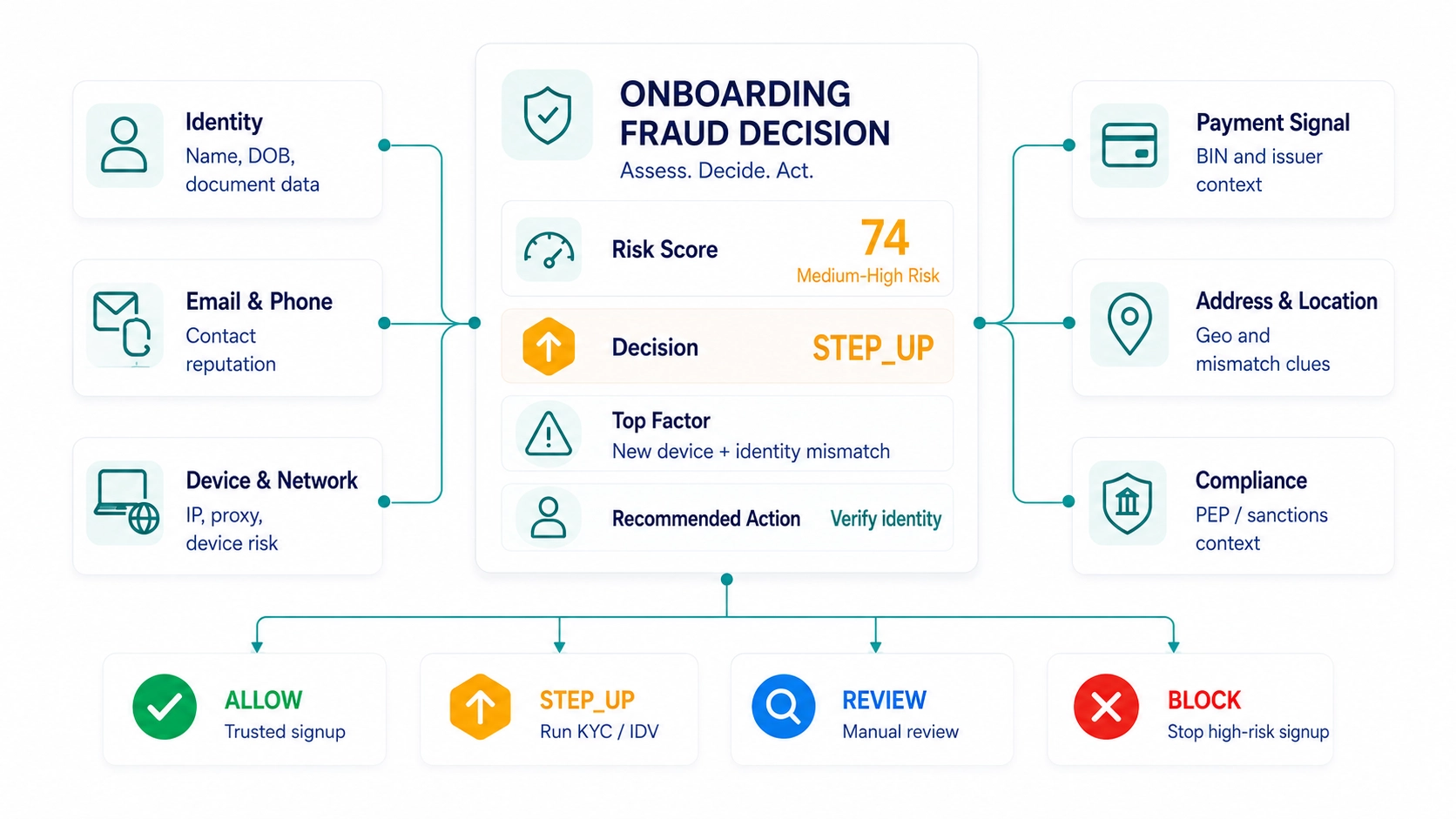
Fake accounts, identity inconsistencies, suspicious payment activity and risky network signals can all appear during onboarding. ScreenlyyID helps assess that context early, before higher-risk users move further into your platform.
What ScreenlyyID Does
Turn onboarding fraud signals into the clear decisions
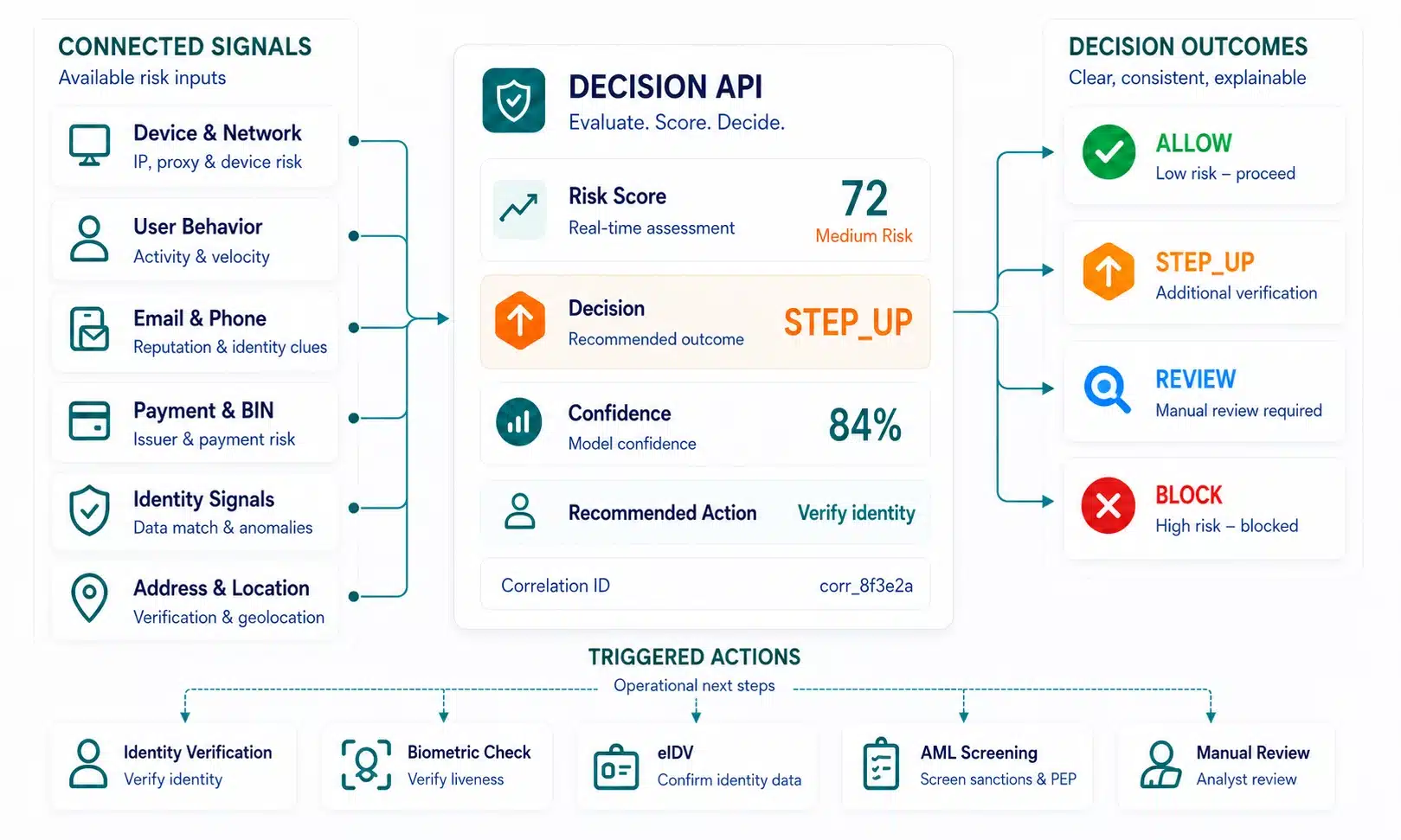
Detect onboarding fraud risk before heavier verification runs by bringing identity, contact, network, payment and compliance signals together. ScreenlyyID returns a risk score, key reasons and the recommended next action.
How it Works
Apply the right verification to every user
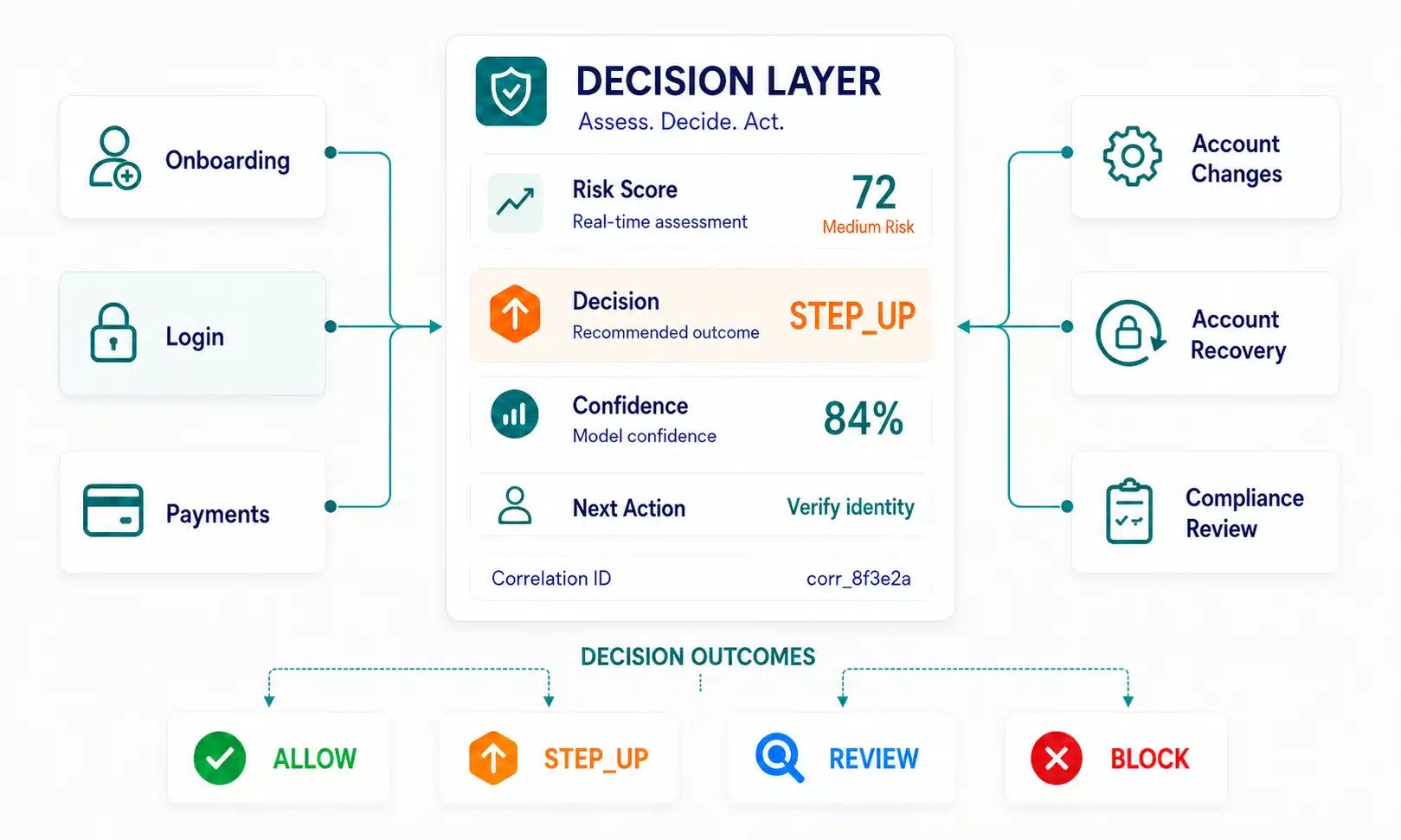
Assess onboarding fraud risk first, then match the next step to the level of risk. ScreenlyyID combines available signals, scores the onboarding event and returns the recommended action.
01
Send onboarding event
Submit available user and event context.
02
Enrich the signals
Run supported checks and add relevant risk context.
03
Score the risk
Identify the level of risk and the factors driving it.
04
Return the decision
Receive an allow, step-up, review or block outcome.
Key Capabilities
Detect more onboarding fraud with connected signals
Combine onboarding fraud signals before heavier checks run. Use identity, contact, network, payment and compliance context to uncover risk earlier and make better onboarding decisions.
Decision Outcomes
Turn onboarding risk into clear action
Onboarding fraud risk should lead to a clear next step. ScreenlyyID turns each decision into an actionable outcome so lower-risk users can continue while higher-risk users are stepped up, reviewed or blocked.
Decision-First Protection
One decision layer across fraud, identity, and compliance
Show us your onboarding, login, payment or compliance journey and we’ll show where ScreenlyyID can reduce unnecessary verification, trigger stronger checks and improve risk decisions.
- Connected risk signals
- Real-time decisioning
- Reusable orchestration
Flexible Deployment
Add onboarding decisioning without replacing your stack
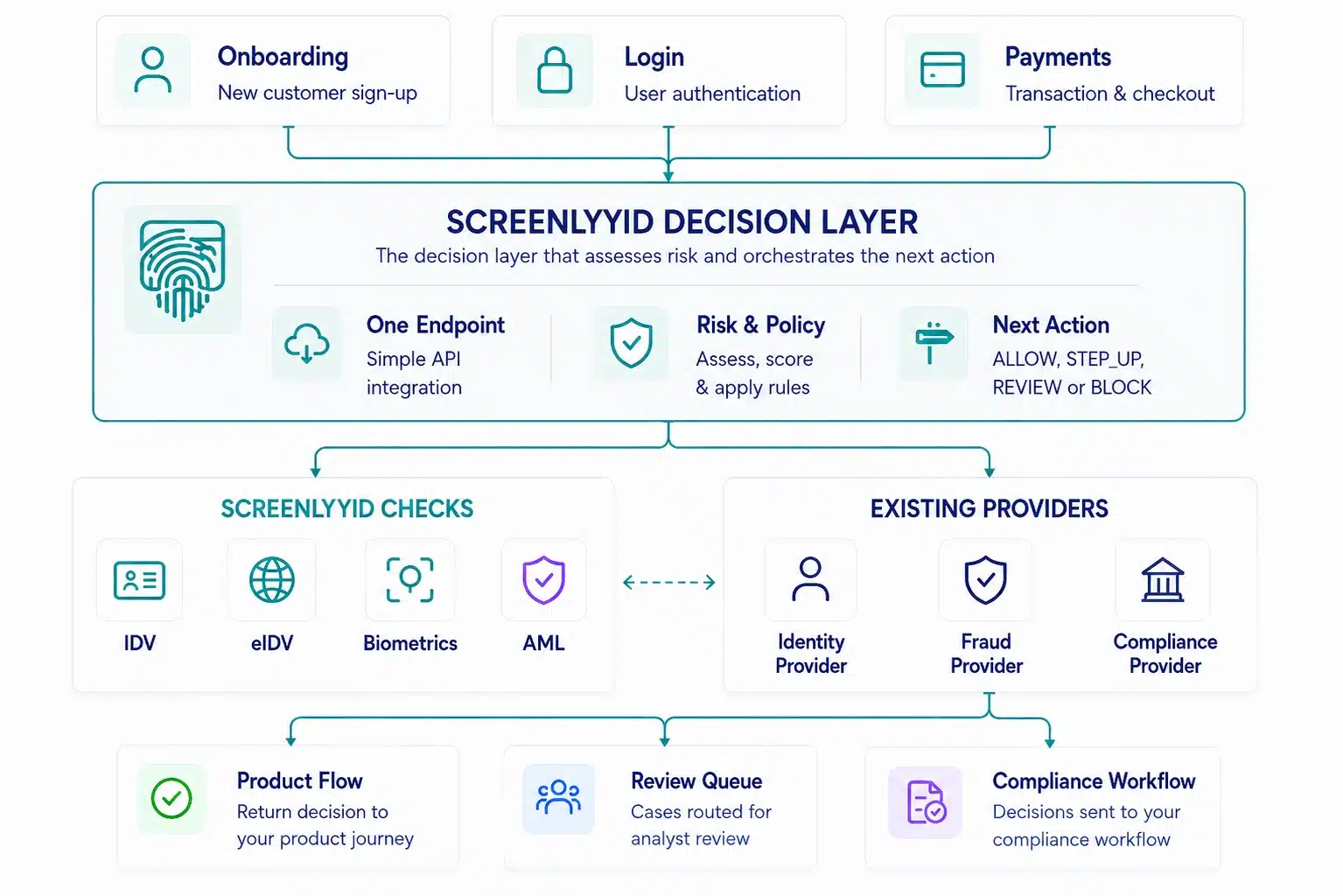
Use ScreenlyyID as your full fraud and verification stack, or connect it with the KYC, AML, identity and fraud tools you already use. Send each onboarding event to the Decision API and use the returned outcome to decide what happens next.
Where it Fits
Prevent onboarding fraud across high-risk journeys
Onboarding fraud can appear anywhere trust must be established before access, credit, payments or regulated services are granted. Use risk scoring to identify higher-risk users early and apply the right level of verification.
For Fraud and Compliance Teams
Understand what drove the risk
Give fraud, compliance and support teams clear context behind every onboarding decision. See the risk score, key factors, checks run and decision status so higher-risk applications can be reviewed faster and handled consistentl

Platform Coverage
See the full picture of onboarding risk
Onboarding fraud is easier to detect when signals are assessed together. Connect identity, contact, network, payment and compliance context to build a clearer risk picture and return the right next action.
Why ScreenlyyID
Detect onboarding fraud with more context
Go beyond isolated checks. ScreenlyyID brings identity, contact, network, payment and compliance signals together in one decision, while working with the tools and verification providers you already use.
Common Questions
Onboarding fraud questions answered
Common questions about onboarding fraud. See how ScreenlyyID helps teams trigger stronger checks only when risk requires it.
Onboarding fraud happens when bad actors use false, stolen or manipulated information to create accounts or access services. ScreenlyyID helps assess the risk around each onboarding event before the user is approved.
Businesses can reduce onboarding fraud by assessing multiple signals during signup and applying stronger checks only when risk increases. ScreenlyyID combines available identity, contact, network, payment and compliance context to help decide whether to allow, step up, review or block.
Onboarding fraud detection analyses signals around a new user to identify suspicious patterns or inconsistencies. ScreenlyyID brings those signals together into a risk score, key reasons and a recommended next action.
Onboarding risk scoring evaluates the risk around a new customer before access or services are granted. ScreenlyyID uses available onboarding signals to help determine whether the user can continue or should face additional verification or review.
Onboarding fraud prevention can assess risk before and around KYC checks to help determine when stronger verification is needed. ScreenlyyID can work alongside existing KYC, AML and fraud tools, or as part of a broader fraud and verification stack.
Contact Us
See Risk Decisioning in Action
See how ScreenlyyID helps you evaluate risk, orchestrate decisions, and trigger verification only when needed.
Complete the form and we’ll walk you through how it fits into your existing stack and improves fraud prevention, conversion, and cost efficiency.
- See real decision flows
- Understand integration
- Explore use cases
- Get tailored pricing
Start small. Scale fast.
See how risk decisioning fits into your flow
Walk us through your onboarding, login, payment, or compliance journey and we’ll show where decisioning can help you approve trusted users faster, trigger the right checks, and stop high-risk activity earlier.
- No Set Up Fees
- API-first integration
- Works with your stack