
Trigger KYC only when risk requires it
Assess risk first. Trigger KYC only when it’s needed. ScreenlyyID helps businesses allow trusted users through, step up risky journeys, review uncertain cases and block high-risk activity.
- Real-time risk scoring
- Connected fraud signals
- Step-up verification
- Fraud-first decisioning
The Problem
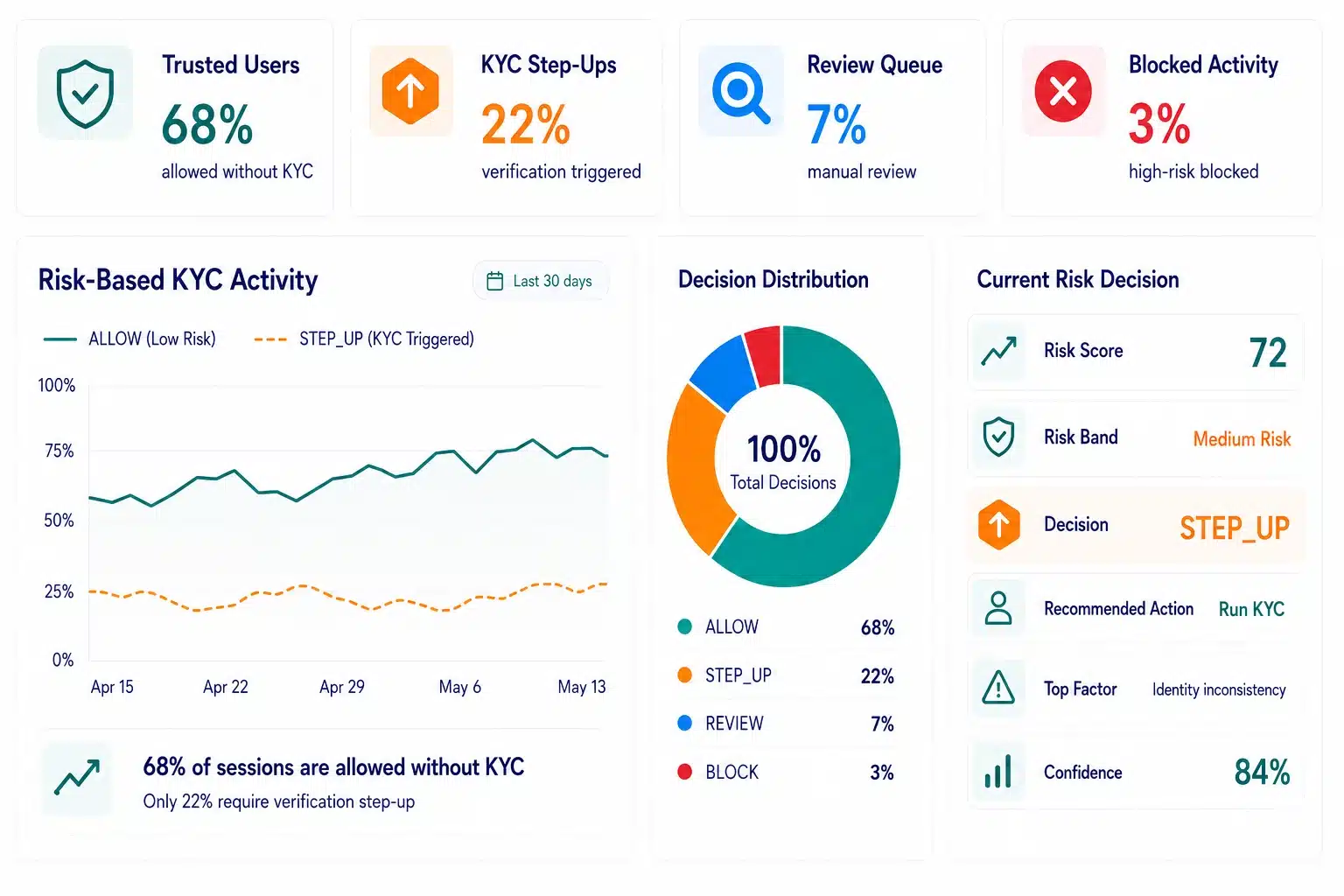
Most KYC flows verify too early or too often
Most KYC flows ask too much, too early. That adds cost, creates friction and leaves teams making risk decisions across disconnected tools. Verification should get stronger when risk rises, not heavier for everyone.
What ScreenlyyID Does
Assess risk before KYC runs
ScreenlyyID assesses risk before KYC, AML or identity checks run. It helps decide when a user can continue, when stronger verification is needed, when compliance review should happen and when high-risk activity should be held or blocked
How it Works
Score, decide and trigger the right next step
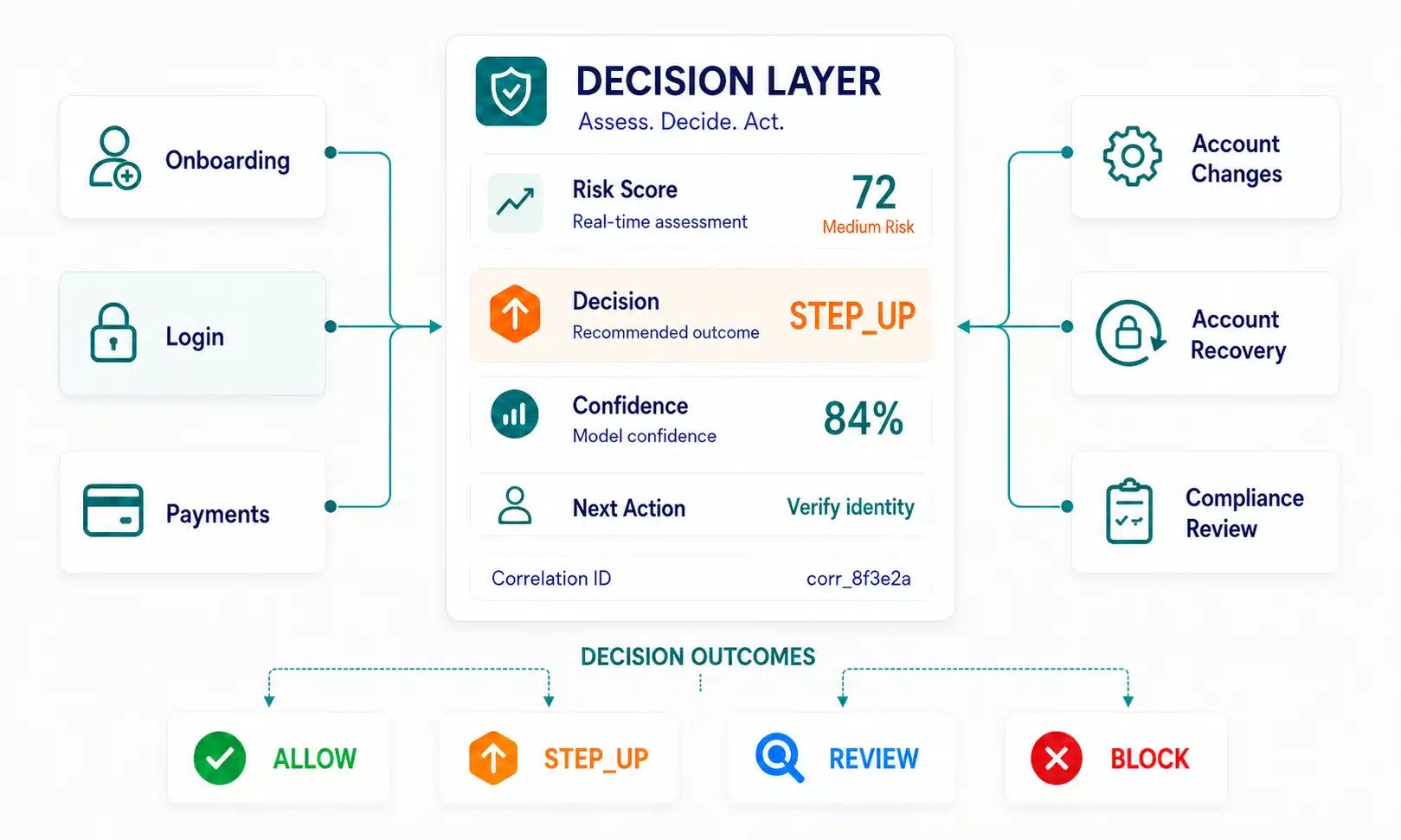
Risk-based KYC starts with the event, not the document check. ScreenlyyID assesses available user, session and risk signals, scores the event and recommends the right next step.
01
Receive the event
Onboarding, account change, recovery or another high-risk moment.
02
Read the signals
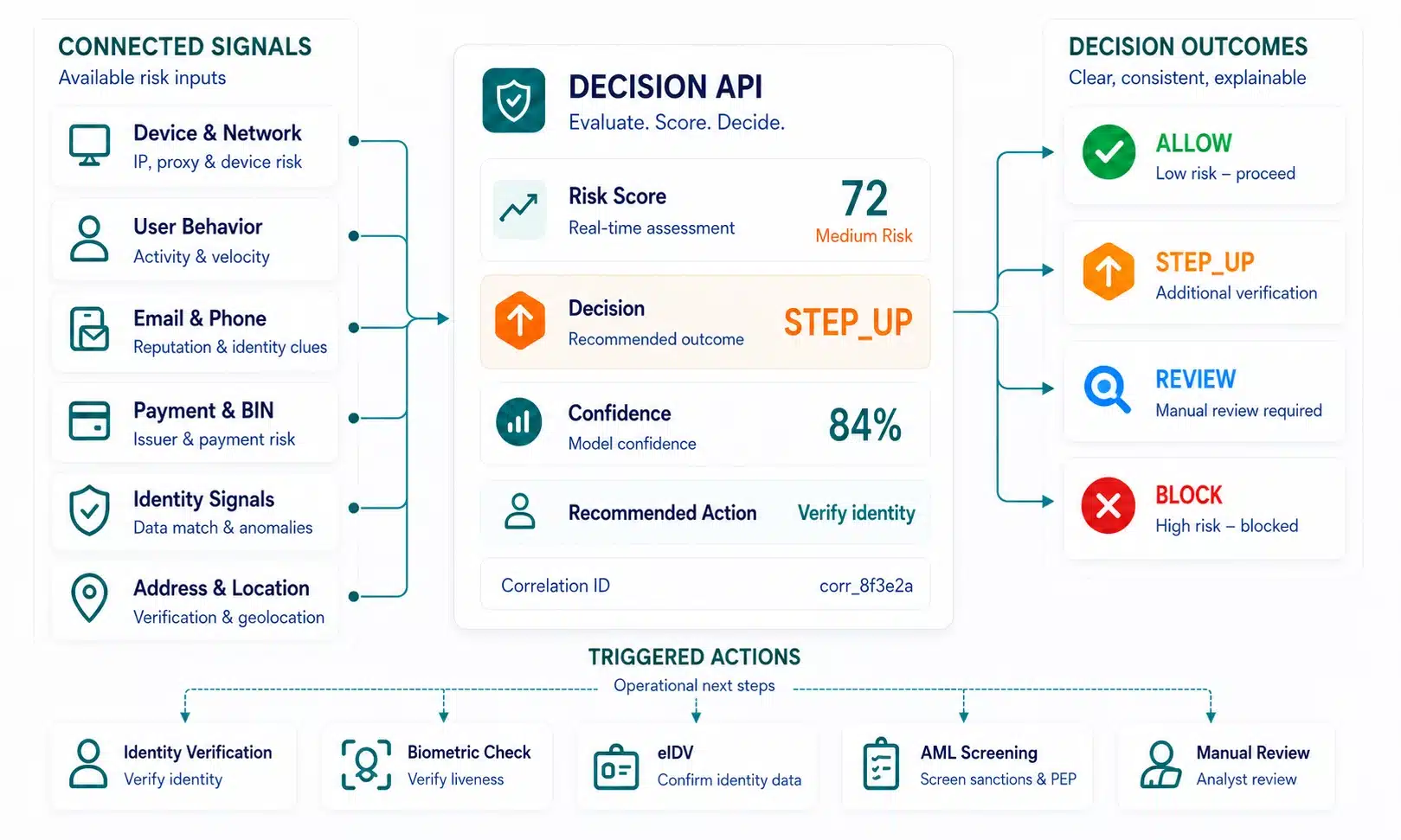
Identity, email, phone, IP, device, payment and compliance context where available.
03
Score the risk
Return a risk score, risk band and top decision factors.
04
Trigger the next step
Allow, step up, review or block based on risk and policy.
Key Capabilities
KYC decisions with more context
ScreenlyyID helps teams make KYC decisions with more context than a single verification result. The goal is to apply the right level of friction at the right moment.
Decision Outcomes
Give every KYC event a clear next action
Risk-based KYC should return more than a score. ScreenlyyID turns risk context into clear decisions your teams can act on: allow, step up, review or block.
Decision-First Protection
One decision layer across fraud, identity, and compliance
Show us your onboarding, login, payment or compliance journey and we’ll show where ScreenlyyID can reduce unnecessary verification, trigger stronger checks and improve risk decisions.
- Connected risk signals
- Real-time decisioning
- Reusable orchestration
Flexible Deployment
Add risk-based KYC without replacing your current tools
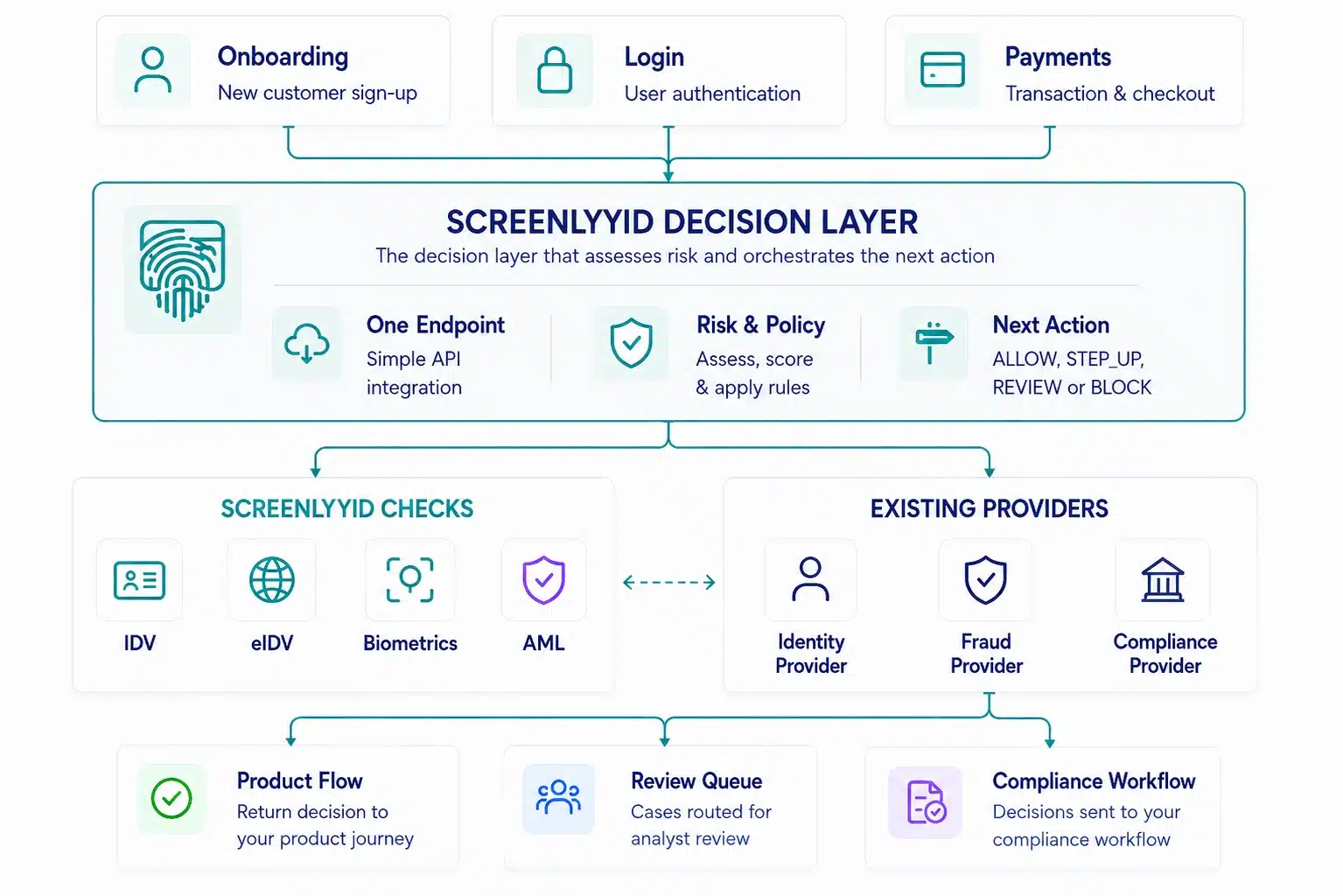
ScreenlyyID can operate as a decision layer in front of your current identity, fraud and compliance stack. Start with one flow, then expand the same decision model across other high-risk moments.
Where it Fits
Use risk-based KYC across high-risk moments
KYC should not stop at onboarding. Identity risk can appear during account access, recovery, payments, profile changes and compliance review. ScreenlyyID helps trigger stronger checks when the moment requires more assurance
For Teams
Give review teams the context behind KYC risk
When a user needs review, the team should see more than pass or fail. ScreenlyyID can show the decision result, risk score, top factors, checks run and correlation ID so support, fraud and compliance teams understand why the event was routed.

Platform Coverage
Built for fraud, identity and compliance signals
Risk-based KYC is stronger when decisions look beyond the document check. ScreenlyyID brings together available identity, fraud, contact, network, payment and compliance context so teams can decide when to verify, step up, review or block.
Common Questions
Risk-based KYC questions
Common questions about risk-based KYC, identity verification, AML review and how ScreenlyyID helps teams trigger stronger checks only when risk requires it.
Risk-based KYC adjusts identity verification based on the risk of the user, event or workflow. Instead of sending every customer through the same checks, businesses can apply stronger verification when risk is higher and reduce friction for lower-risk users.
Risk-based KYC helps businesses assess risk before running heavier checks. ScreenlyyID reviews available identity, fraud, contact, device, network, payment and compliance context, then helps decide whether to allow, step up, review or block.
Yes. ScreenlyyID can help trigger step-up verification when the risk score, top factors and customer policy indicate that stronger identity checks are needed.
Risk-based KYC helps teams identify higher-risk or uncertain cases that may need AML, sanctions, PEP or compliance review. ScreenlyyID can provide risk context, reason codes and decision records so teams understand why a case needs attention.
No, ScreenlyyID can operate as a decision layer before and around your existing KYC, AML, IDV and fraud tools, helping decide when those checks should run and what should happen next.
Contact Us
See Risk Decisioning in Action
See how ScreenlyyID helps you evaluate risk, orchestrate decisions, and trigger verification only when needed.
Complete the form and we’ll walk you through how it fits into your existing stack and improves fraud prevention, conversion, and cost efficiency.
- See real decision flows
- Understand integration
- Explore use cases
- Get tailored pricing
Start small. Scale fast.
See how risk decisioning fits into your flow
Walk us through your onboarding, login, payment, or compliance journey and we’ll show where decisioning can help you approve trusted users faster, trigger the right checks, and stop high-risk activity earlier.
- No Set Up Fees
- API-first integration
- Works with your stack